Playlist

Money Makes the World Go Round

How the world views money and its importance in business and society.

6 Lectures

  • Agassi talks about the importance of money and its role in shaping the way entrepreneurs think about their businesses. An entrepreneur should not build a company to make money, he emphasizes.

  • Passion vs. Money

    00:03:32

    Guy Kawasaki, BusinessStanford University

    Whatever you build, says Kawasaki, it's about passion, and less about money. Your goals should be about changing the world, or making the world a better place, he says. He also talks about his experience growing up thinking that money was the most important thing in life. He advises students to study abroad and to spend as much time learning as possible.

  • Kawasaki thinks that companies like Nordstrom, Audi, and Nike make the world a better place. His advice: don't start a business because you think that's what's hot. You should study and do what you love, he says. He can't promise you that the money will come, he does promise that if you start a company simply for the money, you will probably end up miserable.

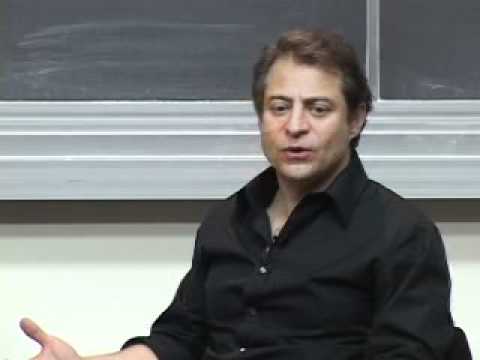
  • Inspired by Charles Lindberg's Spirit of St. Louis, X PRIZE founder and space entrepreneur Peter Diamandis explains to interviewer George Zachary of Charles River Ventures that offering a high profile cash reward can often be more financially advantageous - and more aggressive in moving forward a societal push - than simply funding a good idea. Diamandis describes his incredible quest for funding, pitching hundreds of potential benefactors without success. Not to be deterred, he announced the first X PRIZE contest with no competing teams and not a penny of the $10 million  prize money on hand. His unbelievable tale grows even longer as he describes how funding came from a bet placed with a space insurance company, and how he had to scramble for the $50 thousand premium every month.

  • Behavioral Finance is a relatively recent revolution in finance that applies insights from all of the social sciences to finance. New decision-making models incorporate psychology and sociology, among other disciplines, to explain economic and financial phenomenon, such as erratic stock price variations. Psychological patterns such as overconfidence and perceived kinks in the value function seem to impact financial decision-making, but are not included in classical theories such as the Expected Utility Theory. Kahneman and Tversky's Prospect Theory addresses such issues and sheds light on irrational deviations from traditional decision-making models.

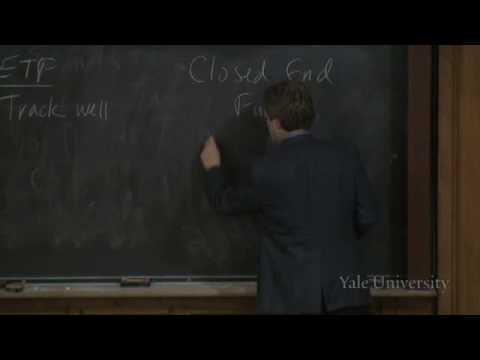
  • Most people are not very good at dealing in financial markets. Professional money managers, such as financial advisors and financial planners, assist individuals in matters of personal finance. FINRA and the SEC monitor the activities of these managers in order to protect individual investors. Mutual funds, exchange traded funds also exist to assist individual investments, and pension funds provide further services. These investment institutions help people to put money in diversified portfolios and, in some cases, reap some tax benefits for funding their retirement income.